
How the Olden Era Ranked Ladder Works — Modes, Rating, Seasons and Reading the Board
By OldenEra.gg Staff
Ranked play in Heroes of Might & Magic: Olden Era is three separate ladders, one per mode, each with its own rating. This guide explains what the modes are in the game's own words, how the rating moves, what changed at the 30 September reset, and how to read every column on the OldenEra.gg ladder once you are on it.
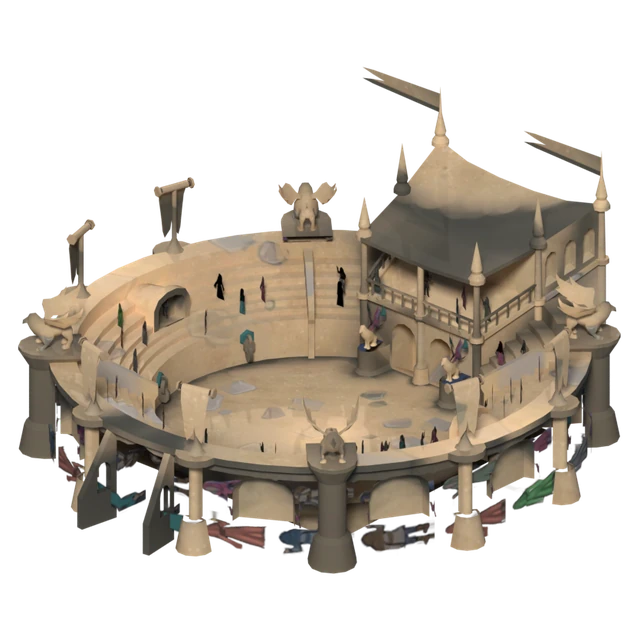
The game's "Find Opponent" screen offers three modes, and each one has its own leaderboard and its own rating. The descriptions below are the game's own.
| Mode | What the game says | What it means for you |
|---|---|---|
| Classic | "You can control multiple heroes. If one of them dies, the game continues." | The full Heroes experience: several heroes, several towns, long logistics chains, a hero lost is a setback rather than the end. |
| Single Hero | "Similar to Classic Mode, but each player controls only one hero. Faster-paced and more focused." The map rules add: "You cannot hire additional heroes during the game. If your hero dies, you lose." | One hero carries everything. No chaining, no scouts, and a lost main is a lost game, so every fight is a decision. |
| Arena | "A quick game mode in which you draft a hero, their equipment, and an army, then directly proceed to duel with an opponent." | No adventure map at all. You build a hero, pick artifacts and an army, and fight one battle. |
Two practical consequences. First, your Classic rating says nothing about your Arena rating: climb each ladder separately. Second, Arena is always the same map and the game does not record factions for it, which is why the Arena ladder on this site has no map meta and no faction tab, while Classic and Single Hero do.


When you first queue, the game asks you to pick a skill level. Its three options read, in short: new to Heroes or to strategy games; played Heroes or other strategy games before; extensive experience "including against human opponents". You also choose a region to play in, and can tell the game to auto-reject matches above a latency you set.
Before a Classic or Single Hero game starts there is a pick and ban phase: the game offers to ban a faction and to ban heroes, and shows you the opponent's choices as they are made. The map template — the set of rules the random map is generated from — is part of the match as well; see our guide to Olden Era map templates for what each one asks of you.




How the rating moves
Everyone's rating restarted at 1000 with the update of 30 September 2026 (version 0.81.02, the one that added Alliances and the fully random map generator). The same patch notes describe how rating changes work now:
- How much a result moves your rating depends on your rank and on the rating gap to your opponent.
- At the lowest rank, a win is worth about +40 and a loss costs about −10.
- At the highest rank, it is the reverse: a win is worth about +10 and a loss costs about −40.
- In between, the numbers slide between those two ends.
So the climb is fast at first and slow at the top, and a top player protects a rating more than they grow it. The patch also added automated cheater detection and a low-priority queue, and since that date the game records both players' factions in the match history — which is what made faction statistics possible at all.
Details of the matchmaking formula beyond those notes have not been published, so you will find no "exact Elo" on this site: what you see is the rating the game shows, as it stood at the latest capture.
The in-game leaderboard, and what OldenEra.gg adds
The game's own Leaderboard screen shows the top players of each mode. OldenEra.gg reads those boards and the public match histories behind them several times an hour, and keeps every capture. That history is the point: a board tells you where people are, a series of boards tells you where they are going.
Here is what each part of the site is built from:
- Ladder — the latest board: rank, rating, record, win rate and recent form, with the rank change since yesterday and since last week. A NEW badge marks a player who was not on the previous board.
- Percentiles — "Top 1%", "Top 10%", "Top 25%", "Top 50%" rank a player by rating among everyone tracked this season. The same cut-offs drive the rating-bracket views on the Meta and Factions tabs, so "what the Top 10% play" means exactly the players wearing that label.
- Movers — the biggest climbs and falls between two boards, by rank and by rating, plus who entered and who dropped off.
- Meta — which map templates the ranked games are played on, how often each is picked, how long it tends to last and who performs best on it.
- Factions — pick rates, win rates and the faction-versus-faction matchup grid, since the game started recording factions. The tier list is computed from the same games.
- Duration — average game length in in-game days per template, and how it moves over time.
- Stats — current and best win streaks, rivalries (the most-played head-to-heads), activity by day and hour, and the rating distribution.
- Player profiles — open any name for rank history, recent matches with template and factions, per-template and per-faction records, and the current streak. Streamers can pull a one-line summary into chat; see For streamers.
Reading the numbers responsibly
- A win rate from fewer than 10 games is greyed out everywhere on the site. It is shown, but it is a hint, not a verdict.
- Faction win rates leave out mirror matches: a Temple-versus-Temple game says nothing about Temple.
- A template called "Unknown" is a game the ladder recorded without a map template. It counts toward the ladder, not toward the map meta.
- The site shows the current season only. Games from before the 30 September reset are kept, but never mix into this season's numbers.
Seasons and the 30 September reset
The 30 September 2026 update reset every ladder: ratings back to 1000, records back to 0–0. On this site that is the start of the season; boards, movements, streaks and rank charts begin there. Read what changed on the site that day. When the next reset comes, the same will happen again, and the previous season's data stays on file.
Frequently asked questions
Why am I not on the ladder? The site tracks the players who appear on the game's leaderboards. If you are below the board's cut-off in a mode, there is nothing to capture yet. Climb into it and you will appear on the next update, with a NEW badge.
Why does my rating here differ from the game right now? Boards are captured on a schedule, not live. The ladder page says when it was last updated; a game you finished a few minutes ago will show up on the next capture.
Why does a player have two different win rates? Each ladder is separate. A player's Classic record and Single Hero record are different seasons of a different game, and the profile shows one ladder at a time.
What is a "bracket"? A view of the Meta or Factions tab restricted to the top 10% or top 1% of players by current rating. It answers "what do the best players pick, and does it work for them" rather than "what does everyone pick".
Where does the daily Meta Pulse come from? From this data. Every morning a report is drafted from the day's boards, movers, stats and faction tables, then checked line by line against those numbers before it is published. Read the latest.