
Olden Era Glossary — Law Points, Astrology, Pick & Ban, Templates and Ladder Terms Explained
By OldenEra.gg Staff
Olden Era borrows the vocabulary of twenty-five years of Heroes games and adds systems of its own. This glossary explains the terms you will meet in ranked play and on OldenEra.gg. Where the game itself defines something, we quote its help text; where a term is ours (a bracket, a mover), we say exactly how we compute it.


 Law Points, Law Seals and Laws. The game's help text: "Law points are a special resource used to activate your faction's unique bonuses. They are generated by your cities and by heroes when they capture Global Map objects and or win battles (20% of the hero's XP is converted into Law points). When you accumulate enough points, you earn a Law Seal, which can be spent to enact a Law or saved to unlock more powerful, higher-tier Laws later." Each faction has its own set of laws, in lines of several levels; every faction page in the database lists them with their Seal prices — for example Temple or Necropolis.
 Astrology Points and Insight. Again the game: "Astrology points are a special resource generated by your cities. They are used to learn high Neutral magic — powerful Global Map spells that also require the hero to meet specific level requirements. When you accumulate enough points, you gain an Insight, which can be spent to unlock and learn a high Neutral spell." The spell browser marks which spells are bought with Insight.
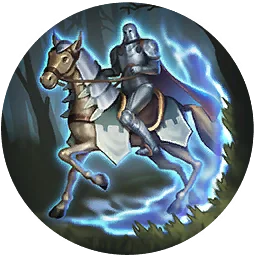

Weeks and months of the astrologers. Each new week and month the astrologers proclaim an effect. The game's examples include a Week of Luck ("the Luck of every hero is maximized"), a Week of Paths ("all heroes can move greater distances"), a Week of Rage ("strengthens all neutral squads on the global map") and a Month of Plague ("all unowned creatures in cities and external dwellings are killed"). Some are blank: "Just another week…". Lobby settings can switch random week effects off, which ranked templates generally do.
Weekly growth and Day 7. Dwellings add their recruits at the start of each week, so a dwelling finished on Day 7 pays out on Day 1 of the next week. Every unit page in the database shows the line's weekly growth, and every town's buildings page shows which dwelling recruits what.
 Morale. The game's description: "The hero increases the Morale of all creatures in their army by the value of their own Morale attribute. This affects the chance to take an extra turn or skip a turn."
 Luck. "The hero increases the Luck of all creatures in their army by the value of their own Luck attribute. This affects the chance of those creatures landing a Lucky or Unlucky strike."


 Attack, Defense, Spell Power, Knowledge. The four hero attributes. Attack and Defense scale your creatures' damage dealt and taken; Spell Power scales spell effects; Knowledge sets your mana pool. The heroes browser lists every hero's starting values, and the battle calculator shows exactly what a point of Attack is worth in a given fight.
Might and Magic heroes. Every faction has two hero classes, one on each side of that divide — nine might heroes and nine magic heroes per faction in the current build. Might classes lean on Attack and Defense, magic classes on Spell Power and Knowledge. The heroes browser can be filtered by either.
Specialisation. Each hero's signature bonus: a creature, a spell, a skill or a school of magic that scales with their level. Shown on every hero page.
Skills and perks. Hero skills come in three ranks (Basic, Advanced, Expert) and each unlocks perks; the game sorts skills into common, class and faction skills. See the skills browser.
Creature bank. In the game's own words, "special map objects that grant units upon defeating their guards". The battle sites section lists each one with its guards and rewards.
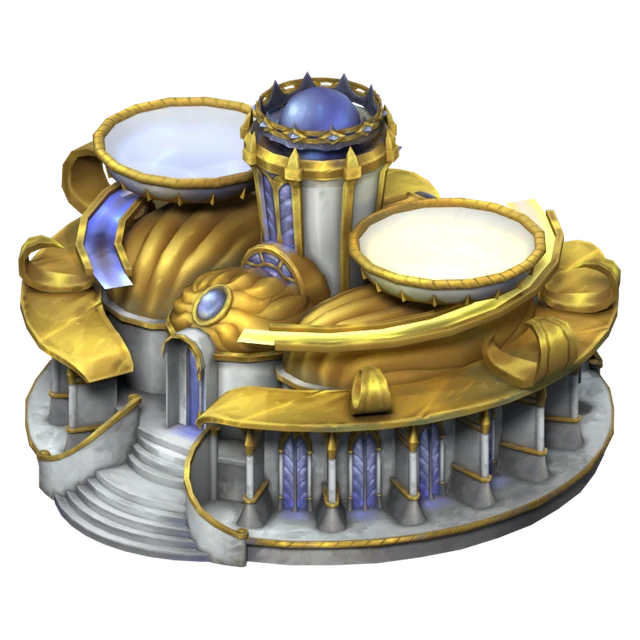
Pandora's Box. A chest whose contents — troops, resources, artifacts — you take after beating its guard. Several templates are built around collecting them; see the templates guide.
Artifacts and sets. Equipment for a hero, by slot and rarity; pieces of a set add bonuses as you collect more of them. The artifact browser lists every artifact, sets every set threshold, and the loadout builder totals a full kit.
Alliances. Added in the 30 September 2026 update: allied players take their turns at the same time, share fog of war, can trade armies, artifacts and resources, and win together when one of them completes the map's victory condition. Team formats such as 2v2 play on alliance templates.
Multiplayer terms
Classic, Single Hero, Arena. The three ranked modes. Classic: "You can control multiple heroes. If one of them dies, the game continues." Single Hero: "You cannot hire additional heroes during the game. If your hero dies, you lose." Arena: "A quick game mode in which you draft a hero, their equipment, and an army, then directly proceed to duel with an opponent." How the ranked ladder works →
Template. The recipe a random map is generated from — layout, guards, treasure and win condition. Every ranked template explained →
Pick and ban. The phase before a Classic or Single Hero match in which players ban a faction and ban heroes before the final choices are locked. The game's own mode label for it is "Pick/Ban"; in our match data the handful of games recorded during this phase appear under that name rather than a template.
Mirror match. Both players on the same faction. We leave mirrors out of faction win rates, because a Temple-versus-Temple result says nothing about Temple; the faction stats show how many mirrors each faction has played.
Rating. The game's ranked rating in a mode. Everyone restarted at 1000 on 30 September 2026; wins are worth roughly +40 at the lowest rank and +10 at the highest, losses the reverse, with the gap to your opponent weighed in. We show the rating as it stood at the latest capture.
Leaderboard. The game's in-game ranking screen for a mode. OldenEra.gg reads it several times an hour and keeps every board, which is where rank history comes from.
Season. The period between two ladder resets. The current season began on 30 September 2026, and the site shows only its games.
OldenEra.gg terms
Percentile ("Top 1%", "Top 10%"). A player's standing by rating among every player tracked this season in that mode. The named cut-offs are 1%, 10%, 25% and 50%; everyone else wears their exact percentile.
Bracket. A view of the Meta or Factions tab restricted to the players currently in the top 10% or top 1% by rating. A game between two players in the bracket counts once for each of them.
Movement / movers. A player's change in rank between two boards: since the previous day on the ladder, and since the previous week in the second column. The Movers tab ranks the biggest changes and lists who is new on the board and who dropped off.
Form. A player's most recent results, newest first, as W and L pips on the ladder and the profile.
Streak. Consecutive wins or losses in the latest results; the Stats tab lists the longest current and best streaks on each ladder.
Rivalry. The most-played head-to-head pairings on a ladder, with their record. Also on the Stats tab.
Pick rate / pick share. A faction's share of all faction picks on a ladder, mirrors counted once per side.
Win rate. Wins divided by decided games. For a faction, against other factions only. A win rate from fewer than 10 games is greyed out across the site.
Tier (S, A, B, C, D). On the tier list, fixed bands of faction win rate, symmetric around 50%; the thresholds are printed on the page and nobody votes.
Average length. Mean in-game days (turns) of the games on a template or with a faction, from the matches that recorded a duration. Lower is faster.
"Unknown" template. A game the ladder recorded with no map template. It counts toward the player's record and the ladder, not toward the map meta.
Meta Pulse. The daily report on the ladder, drafted automatically from the day's data and checked against it before publication. Read the latest →
Game build. Every database page carries the Steam build id and the date its data was generated, so a stat can be checked against the patch it came from. See the database.