
Olden Era Jebus Cross Guide — Creature Banks, Hero Chains and the Race to the Centre
By OldenEra.gg Staff · Updated
If you queue ranked Classic, you play Jebus Cross. In the first weeks of this season it accounted for well over half of all recorded Classic games and then climbed past 80% of them; the Classic map meta has today's share, which is worth re-checking now that the 0.82.06 update lets players pre-select the templates they queue for and has added Jebus Arena and Sand Clover to the Classic rotation. It is the template every Classic player has to know, and the one the game describes most simply:
"This template is filled with incredible treasures! Reach the central area before your opponent to claim them — and secure victory in the final battle."
This guide covers the template as the game ships it in build 26428102 (4 November 2026: the 0.82.06 update of 29 October, which grew the map to 176 × 176, rebuilt the central area and raised the guard on every creature bank, and the two hotfixes after it, which restored the six-day hold, raised five banks' guards a little further and slowed the guards on the way into the desert) and the way it is played on the ladder. The template's own facts are from the game files; the strategy is a synthesis of what experienced players publish, with the sources listed at the end. The live numbers — share, win rates by faction, game length — are on the Classic meta, Classic factions and Classic duration pages.
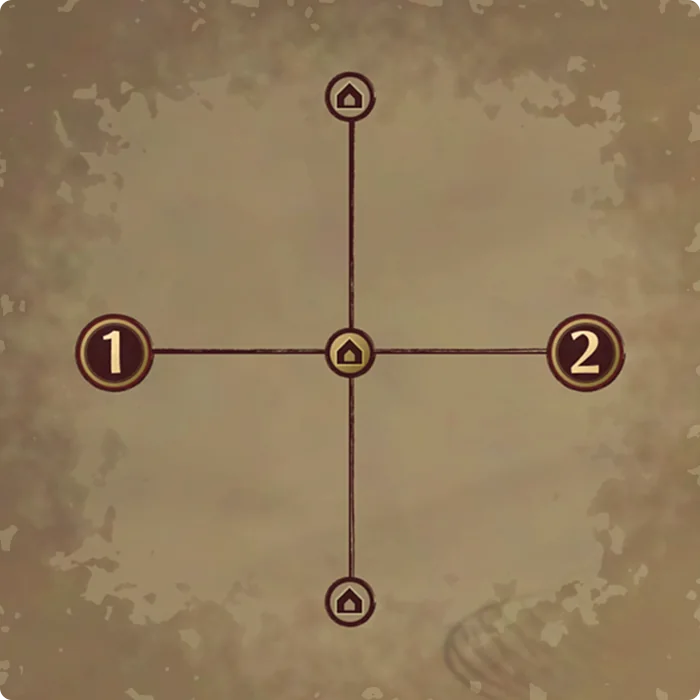
The template in the game's words
| Mode | Classic — multiple heroes |
| Map | Extra Large (176 × 176), two players — 160 × 160 before 0.82.06 |
| Difficulty | Unfair |
| Expected length | 120–180 minutes |
| Heroes | 6 at the start, up to 10, one per city |
| Win condition | City Hold: "Capture the marked neutral city and hold it for a set number of in‑game days to win." Control must be held for 6 days, and the timer resets if the opponent retakes the town. The 0.82.06 update had cut the hold to 5 days; the 0.82.07 hotfix put it back to 6 |
| Tags | Rich Economy, Special Victory Condition, Unusual, Multiple Heroes |
The detailed description: "A rich template focused on capturing 'creature banks' — special map objects that grant units upon defeating their guards. Success relies on efficient hero logistics and careful resource management to reach the lucrative central area as early as possible."
Three sentences, three systems: creature banks are where the army comes from, hero logistics is how it moves, and the central area is where the game is decided. Everything below is about those three.
The game also ships three siblings. Jebus Cross Classic is the open-beta version whose one difference is that "starting cities always match the players’ chosen factions" — on Jebus Cross proper, your starting town's faction is random, which is the first thing to look at on day 1. Jebus Arena, new in 0.82.06, is the old 160 × 160 layout with the towns near the exits to the centre and, by the patch notes, no central town: its text sends you to the centre "and challenge your opponent using the Hell Light Arena. But remember: to take part in the duel, you must first register your hero at one of the Hell Light Spires." Jebus Tournament replaces the city hold with a series of scheduled battles (Week 1 Day 6, then Week 2 Days 1, 3, 5 and 7 in the template's data — the 0.82.06 notes say the final battles now fall a day earlier; three points win) and gives each player their own desert with no path between them; since 0.82.06 that desert has no central town, and neither tournament sibling offers Siegecraft on level-up any more. Jebus Cross itself still does, and the city assault is a siege.
The map
Each player starts in a zone with a town, mines and a spread of guarded objects, and the two starting zones are joined only through the centre. From each start, guarded passes lead toward the middle; from the centre four routes lead out — toward the players and toward the richer areas above and below — and movement in the centre is slow, especially on sand. The centre holds the marked neutral city, the Pandora's Boxes with high-tier troops from other factions, and the banks that pay the most.
The 0.82.06 update rebuilt that centre. The map is 176 × 176 now, and the central area itself can roll smaller or larger from game to game. The secondary central towns used to sit at the main exits from the side areas; now they are placed at random across the centre, and the exits hold "Remote Footholds" instead. The two side areas — above and below the centre — are joined by a portal, so an army can move between them without crossing the desert. And the centre is worth less in weekly recruits than it was: its dwellings give single growth (double before), and the side areas' dwellings give double (triple before). The treasure is still in the boxes and the banks; the towns and dwellings of the centre are less of a prize in themselves.
Because the map is generated from the template, the exact placement of banks and guards differs every game. What does not change: the zone break — the guard between your start and the centre — is the fight that opens the game, and the city hold is the fight that ends it.
Creature banks
A bank is a guarded object that pays in units. The ones in the game, and what they pay, are on the battle sites pages, each with every roll's guard stacks, their power and the reward:
- Units: the Ritual Pyre (Phoenixes), the Underground Labyrinth (Basilisks — "guards and Basilisks respawn every week"), the Colosseum (Cavalry), the Petrified Memorial (Medusae), the Point of Balance (Sentinels of Glory), the Carrion Pile (Waurmos), the Tomb of Vigilance (Dread Knights), Boreal Call (Abyssal Envoys).
- Gold and artifacts: the Dragon Utopia, the Research Laboratory, the Troglodyte Throne and the Overgrown Vori Ruins ("a very large amount of Gold"), the Abandoned Mansion, Ancient Crypt, Raiders' Camp, Black Tower, Twilight Bloom, Abnormal Structure and Cursed Old House.
- Resources: the Alvar Outpost, Trophy Hunter's Den, Prismatic Nest (Gems, Crystals and Mercury), Circle of Life, Iridescent Abbey, Legion's Memorial and Uncanny Rite; and Mearea's Altar, which "grants Gold after defeating its guard".
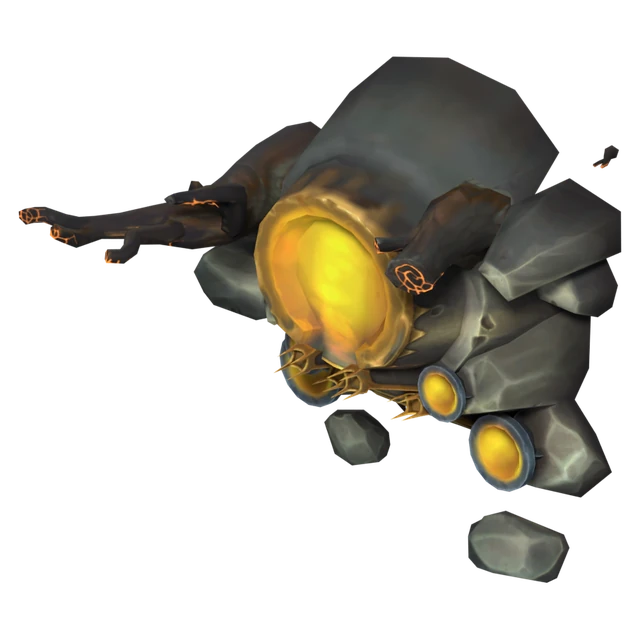
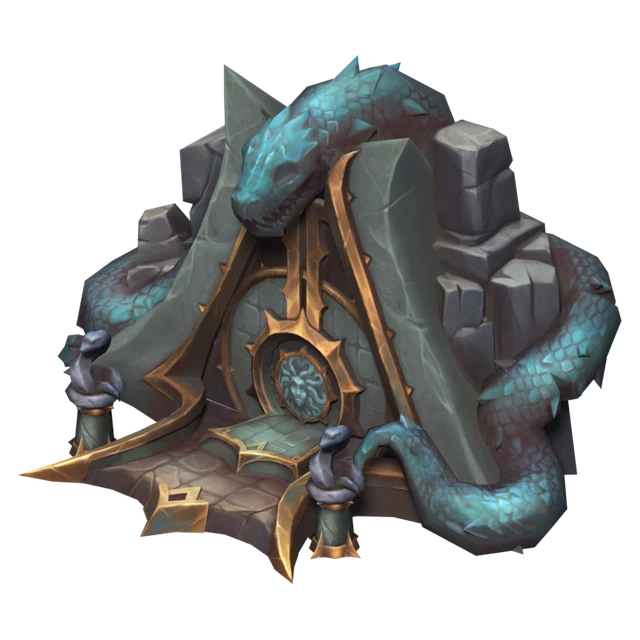
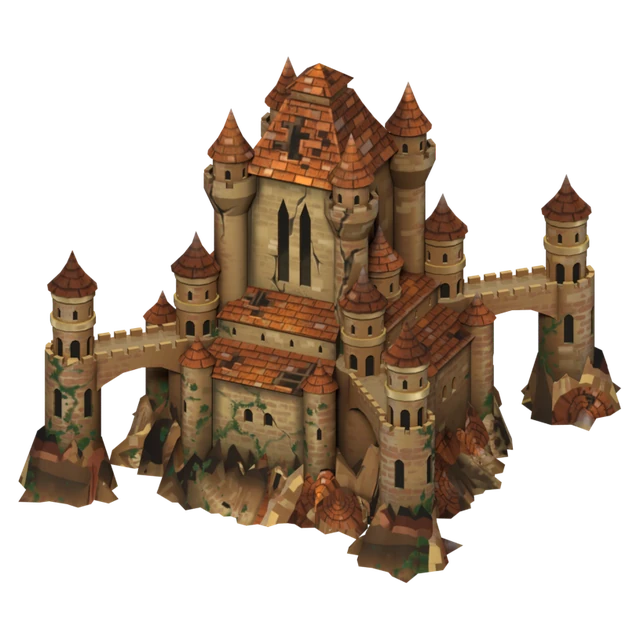
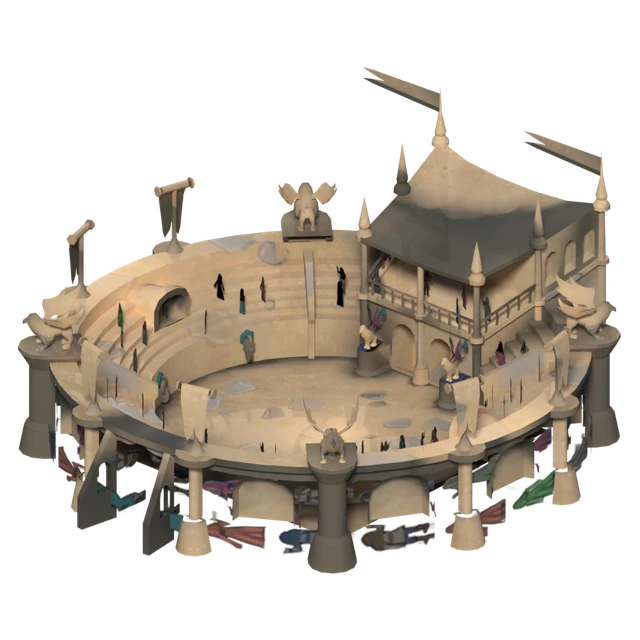
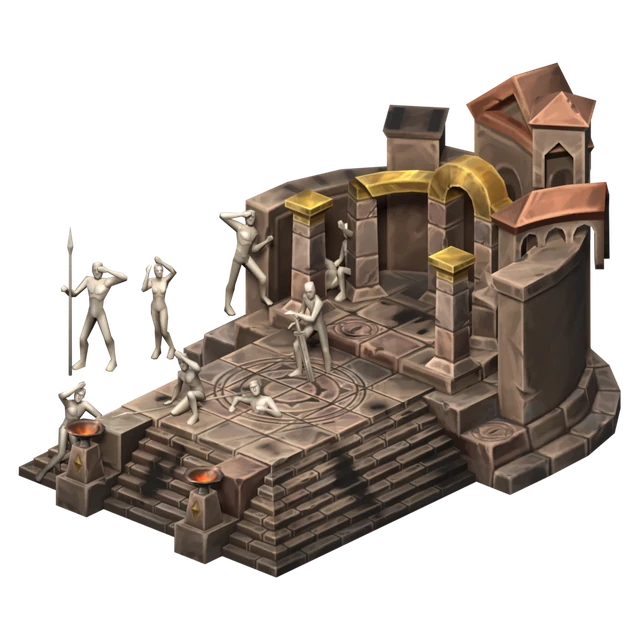
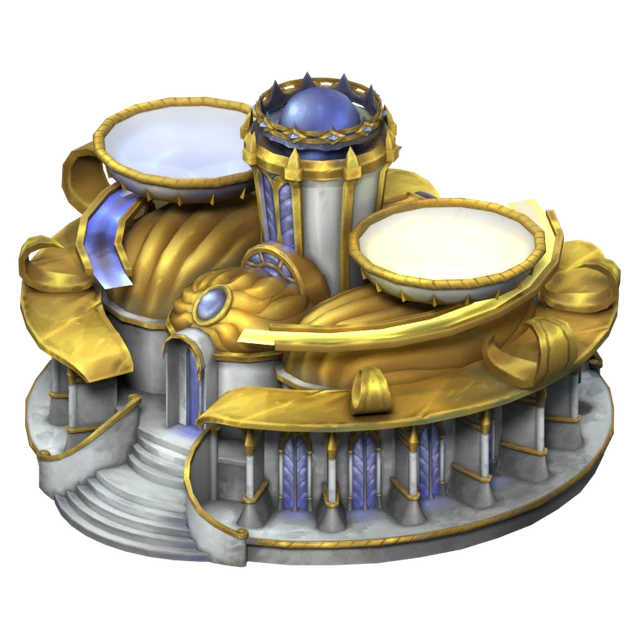
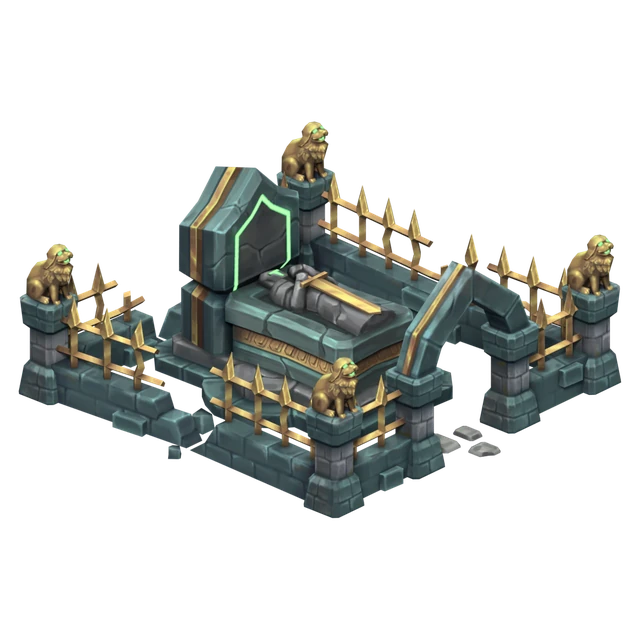
Two things the game's dialog does not tell you and this site does. First, banks come in sizes: they run from size 1 to size 4, with the reward scaling with the guard — 4, 8, 12 and 16 Cavalry from the Colosseum, 1, 2, 3 and 4 Phoenixes from the Pyre — so the same object can be a day-2 fight or a week-2 fight. The 0.82.06 update made every size a harder fight, and the 0.82.07 hotfix added a little more to five of them. Per stack, the Pyre's guard is now 6/11/15/18 Herbomancers (4/8/11/14 before 0.82.06), the Colosseum's 11/19/26/31 Griffins (7/14/20/25), the Petrified Memorial's 7/13/18/22 Minotaurs (5/10/14/18), the Point of Balance's 6/11/15/18 Worldwatchers (4/8/11/14), the Tomb of Vigilance's 20/35/47/56 Undead Pets (14/28/40/50), Boreal Call's 15/26/35/42 Aga’Shoth Riders (11/22/32/40) and the Carrion Pile's 34/54/70/82 Locusts (19/38/55/69). In return, the two smallest sizes of each no longer contain upgraded stacks; the upgrades start at size 3. Second, the guards are known: a bank's fight "differs from standard battles due to the unique placement of both your and your enemy's troops", in the tutorial's words — you can be surrounded — and the exact stacks for every roll are on each site's page. The OldenEra Companion shows them in-game when you point at the object, which on Jebus Cross is the difference between a fight you take and one you walk past.
A current-patch caution: 0.82.06 retuned the small treasure banks too. Mearea's Altar's Couatls now always come as three stacks, and the Trophy Hunter's Den's Dragonslayers as stacks of two that start the battle in the corners around your army, so neither is a days 1–3 fight for a starting army; clear standard resource nodes and easier camps first. The one thing that got easier is artifacts: 0.82.06 cut the external guards on artifacts by 40% at every rarity, and the 0.82.07 hotfix settled the cut at 20%, so they are still lighter than before the update and a guarded artifact in your zone is often worth the detour in week 1.
Hero logistics
Classic means many heroes, and Jebus Cross means using them. The template allows up to ten, and the first piece of advice is to hire early and spread out: at least two heroes to the towns you will capture, and up to six heroes early, spread out to scout. Each hero needs at least one creature of your faction to move, and mixing other factions' creatures into a hero's army costs Morale — so the bank rewards from other factions ride with a secondary hero, or go into the main army only when the faction has a law for it (Necropolis's Death Equalizes All).
Chaining is the Classic skill: positioning heroes so an army is handed from one to the next along a road and travels further in a day than any single hero could. On Jebus Cross it is how the main army reaches the zone break on day 6 with the week's bank rewards already in it. The main hero takes the fights and the experience; the secondaries flag mines, pick up resources, carry reinforcements forward and bring the week's recruits from the town.
Movement spells matter more here than on any Single Hero template: Second Wind ("Immediately restores 35 Movement points to the hero. Usable 1 time(s) per day." — 40 before 0.82.06, and the top level now gives 80 points in one cast instead of a second cast), Town Portal (back to a city you control) and Dimension Door (8 squares, once a day) are bought with Astrology Points — 2, 3 and 4 of them — so the laws and buildings that generate Astrology are worth more on Jebus Cross than their cost suggests. Shadowflight, which lets a hero fly over obstacles until the end of the day, dropped to a tier‑2 spell costing 2 Astrology in 0.82.06, at +40% Movement for every square flown over an obstacle: a corner-cutter for a secondary hero rather than a main-army spell.

A week-by-week plan
Days 1–2. Learn the zone. Your town's faction may not be yours — check it before you build. The main hero clears the easy resource guards and the one or two size‑1 banks within reach; the secondaries flag the Sawmill, Ore pit and Gold mine and pick up the loose resources. Build the dwelling your faction's first week wants (the faction guides have the day-by-day for each, and tier 1–3 creatures are cheaper in every town since 0.82.06, so the first week's gold goes further), then the town hall upgrades.
Days 3–5. The bank chain. Take the banks the main army can clear without losing a stack — the site's roll pages tell you which — and feed what they pay into the army or the second hero. Identify the main stack early and build the town around it: the main town builds units and the Mage Guild, a captured side town builds economy and the Marketplace. Buy heroes; the Tavern's price buys movement and carrying capacity, and on a map this size both are worth more than the gold.
Days 6–7. The zone break. Experienced players aim to break the guard between their zone and the centre around day 6 or 7; newer players can go later without the game being lost, but every day the opponent has the centre alone is a day of Pandora's Boxes and banks they have and you do not. Since the 0.82.08 hotfix the guards on the passages into the desert grow a little more slowly each week, so a later break costs slightly less than it did. Break with the whole bank-fed army, chained forward, with the week's recruits arriving on day 8. What waits on the far side of the guard since 0.82.06 is a Remote Foothold, not a town; the central towns are somewhere in the desert, and the layout picture no longer tells you where.
Week 2. The desert. Clear the centre's banks and boxes — this is where the high-tier troops of other factions are, and since 0.82.06 every Pandora's Box offers a choice: a creature box lets you pick the upgrade, an experience box offers experience, Law Points or Astrology Points, a gold box offers gold, resources or Alchemical Dust — and the Dragon Utopia if the army can take it. The portal between the side areas is the new wrinkle: an army that has cleared the upper area can be in the lower one without crossing the desert, which is both a way to reach the second side area's banks and a direction the opponent can arrive from that the old layout never allowed. Take the marked city when you can hold it: the clock is six days again since the 0.82.07 hotfix (0.82.06 had made it five), it resets if the opponent retakes the town, and the opponent's army arriving in the middle of your hold is the final battle the tagline promises. If the opponent reaches the centre first, the pressure flips instantly — the only answer is to arrive with a bigger army, which means the bank chain in your own zone has to have been better than theirs.
The game's expected length is 120–180 minutes, and the clock is worth knowing before your first ranked game: each player has a reserve that is topped up each day and each week and gets extra time per battle, waits for the opponent's turn are normal, and once the reserve is spent you get seconds per turn. The 0.82.06 update retuned the base values by league and added an "Extended Timers" matchmaking option — in Classic, +120 seconds on the starting reserve, +60 a day, +120 a week, +30 for battles with neutrals and +10 against players — which is the setting to keep ticked while you are learning the template. Plan the long turns — the zone break, the city assault — when there is time on the clock for them.
Factions on Jebus Cross
Temple, Necropolis and Dungeon are the most popular factions on the template, and this site's data from the season's first weeks agreed on Temple and Dungeon for picks. Which faction wins on it is a different question, and it changes with every patch: the Classic faction stats break every faction's record down by template, and the rating-bracket switch shows whether the top 10% agree with the crowd. Two faction-specific notes that do not change: Necropolis's Undead Transformer turns bank rewards into undead, and Hive's Hivemind passives count only the other unique Hive creatures in the army, so a stack of Phoenixes from a Pyre earns them nothing and costs Morale — it rides with a secondary hero.
The pick-and-ban phase before the match bans a faction and heroes; the matchup grid on the faction stats page is where to decide what to ban against the template's strongest faction this week. The glossary explains the phase.


Common mistakes
- Taking unnecessary fights. A bank that costs a stack is a bank that cost you the zone break — and since 0.82.06 every bank's guard is bigger than the one you remember.
- Not using enough heroes. One hero on an Extra Large map is a slow game and a late break.
- Building the town for a faction you are not playing. The starting town is random; check it on day 1.
- Focusing on the opponent before your own game is stable. The centre is a race against the map first and the opponent second.
- Mixing bank rewards into the main army without a plan for Morale. Keep them on a second hero until the laws or the Transformer allow it.
- Breaking late with a small army. The opponent in the centre with a week of boxes is the fight you lose.
Where this comes from
The template's facts and text are from the game files for build 26428102 (4 November 2026, the 0.82.08 hotfix), as published on the Jebus Cross template page and the battle sites pages; the description of the rebuilt centre, the old bank-guard sizes and the matchmaking and timer changes is from Unfrozen's 0.82.06 patch notes, the hold, artifact-guard and passage-guard changes from the 0.82.07 and 0.82.08 notes, and where the notes and the files disagree the text says so. The strategy draws on the Games Edge's Jebus Cross and multiplayer guide (May 2026), Hydrotonic's Steam guide to the 0.81 changes, the HoMM community's long experience with the template's ancestors, and the ranked games this site tracks. Live share, win rates and length: Classic meta · Classic factions · Classic duration.
Related: Every ranked template explained · Exodus guide · How the ranked ladder works