
Olden Era Temple Guide — Heroes, Build Order, Laws and How the Church of the Sun Wins
By OldenEra.gg Staff · Updated
Temple is the faction most ranked players learn the game with, and for a good reason the game states itself:
"The Church of the Sun strives to forge the best version of oneself. Its well‑rounded troops gain extra benefits from buffs."
Well-rounded means no hole in the roster: a cheap melee line, two shooters, a flyer, a heavy cavalry charge and a tier‑7 that shoots. Extra benefits from buffs is the whole design — half the roster has an upgrade that grows stronger every time a positive effect lands on it, and the Angel copies every buff cast on anyone. Temple does nothing exotic; it does everything a little better the longer the fight runs.
This guide covers the current build (game build 26428102, 4 November 2026: the 0.82.06 update of 29 October, which rebuilt Temple's faction skill around Prayers and re-priced the whole roster, and the two hotfixes after it, which put the Resource Riches laws back to their old prices). Stats, costs and ability text are the game's own, from the Temple faction page; the strategy is a synthesis of what strong players publish, with the sources listed at the end. Where Temple actually stands this week is on the tier list and the Classic faction stats, which are recomputed from ranked games every day.

The faction skill: Righteousness

Every Temple hero starts with Righteousness, and the 0.82.06 update replaced it outright. The old version turned every kill and every death into hero stats; the new one is an active ability. The game's text:
"In battle, the hero can read a basic Prayer. Whenever a friendly stack starts its turn while a Prayer is active, it gains a grace that lasts until triggered. Only one Prayer can be active at a time."
There are three Prayers, and a hero reads one of them with their action. It stays up until the end of the battle or until the hero reads a different one, and every friendly stack whose turn comes while it is up picks up its grace. A grace is single-use — it fires once, then is gone — and a stack can carry up to three different graces at the same time. The three, in the game's own words:
- Song of Wrath gives the Grace of Wrath, "causing its next attack to deal +X Damage" — Pure Damage, which no Defense reduces.
- Plea for Healing gives the Grace of Healing, "restoring +X HP the next time it takes Damage. This can revive fallen units."
- Hymn of Power gives the Grace of Power, "extending all positive effects applied to it by +X round(s) the next time it uses an ability."
The numbers grow with the hero's level and are computed in battle, which is why the database page prints the rule and not a figure. Advanced and Expert Righteousness read stronger Prayers; reading one costs Focus Charges unless the hero has Contemplation.
The perks, in the order most players want them:
- Contemplation (Expert): "Activating Prayers does not spend Focus Charges." Without it every Prayer competes with Fine Bolts and Valiant Cry for the same Focus.
- Care for Others (Expert): "Whenever the hero activates any Prayer, the active friendly stack immediately gains its grace." The stack about to act gets the grace now, not next round.
- Secret of Mana (Advanced): "After activating any Prayer, graced friendly creatures restore +1 temporary mana to the hero at the start of their turn. The effect lasts until the end of round." A Cleric casting Blessing and Haste every round lives on this.
- Requiem (Expert): "Whenever any stack dies, the hero gains +1 to all attributes until the end of the round" — the one piece of the old skill that survived, now a round long.
- Fields of Serenity (Advanced): Temple creatures deal +10% and take –10% damage on their native terrain. Good on your own side of Jebus Cross, nothing in the enemy's zone.
- Piety (Advanced): +10% XP.
How to use them: Plea for Healing is the clearing Prayer — read it before the neutrals reach you and every stack that takes a hit heals, Swordsmen included. Hymn of Power is the PvP Prayer once your buffs are up: a Marksman stack with Haste and Blessing on it that uses Fine Bolts keeps both for longer, and so does everything the Angel copied. Song of Wrath is for the round the fight is decided, on the stacks that are about to swing.
The roster, tier by tier
Base creature, weekly growth and recruit price are from the game files; the two upgrades of each line are the choice you make at the dwelling. Prices are for the base creature. The 0.82.06 update made tier 1–3 creatures cheaper in every town and raised Crossbowmen to 100 gold.
| Tier | Line | Growth | Cost | The choice |
|---|---|---|---|---|
| 1 | Swordsman → Guard Captain / Sun's Aegis | 18 | 75 gold | Aegis for the shooter screen, Captain to kill |
| 2 | Crossbowman → Austringer / Marksman | 14 | 100 gold | Marksman, almost always |
| 3 | Griffin → Temple Griffin / Guardian Griffin | 7 | 255 gold | Guardian in PvP, Temple Griffin to clear |
| 4 | Lightweaver → Hierophant / Sun Herald | 6 | 310 gold | Hierophant |
| 5 | Cavalry → Noble Cavalry / Sunspear Cavalry | 3 | 830 gold | Noble for the charge and the morale aura, Sunspear to hit and run |
| 6 | Inquisitor → Mother Superior / Excommunicator | 2 | 1,000 gold | Mother Superior |
| 7 | Angel → Archangel / Apotheosis | 1 | 2,400 gold + 1 gem | Archangel against buffs, Apotheosis against debuffs |
Tier 1: Swordsman



Stats are compared against Swordsman: green is higher, red ▼ lower. A badged glyph is a power the base form does not have; a gold-ringed one is a power it has under the same name but with different rules.
12 HP, 2–3 damage, Attack and Defense 3, and Ranged Defense I ("takes –30% Ranged Damage"), which is why Swordsmen stand in front of the shooters. New in 0.82.06, the whole line has Shields Up, an active that doubles down on the job: "Takes –30% Ranged Damage. Duration: 2 round(s)." The Guard Captain gets Double Strike and Initiative 6; the Sun's Aegis has 15 HP, 6 Defense, Aegis ("this creature and adjacent friendly creatures take –30% Ranged Damage") and Anointed for Defense ("whenever this creature gains a positive effect, its Defense increases by 2 until the end of the battle"). Against shooter-heavy neutrals and factions, Aegis next to your Crossbowmen is the better upgrade; against melee, Captains.
Tier 2: Crossbowman

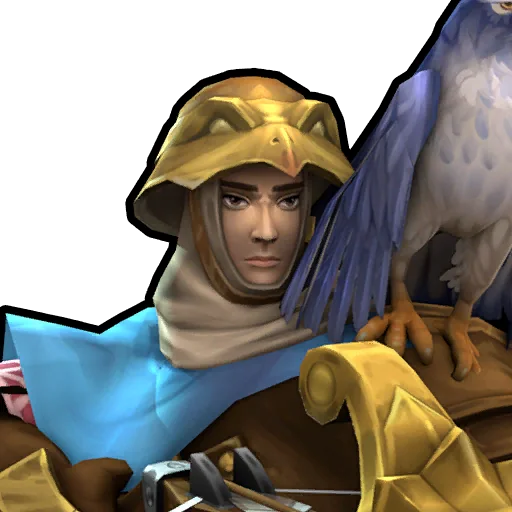
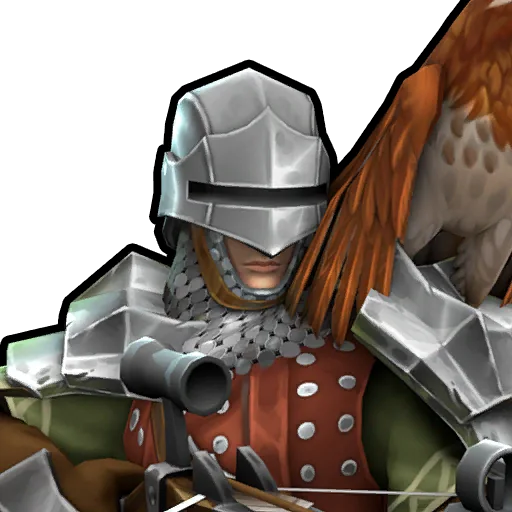
The unit Temple's first two weeks are built on: 3–4 damage, growth 14, and the active Fine Bolts (+20% Ranged Damage for two rounds). The Marksman is the default — Sharpshooter ("Ranged attacks deal full Ranged Damage at any range"), Fine Bolts at +40%, Initiative 6, and Piercing Shot, a half-damage shot that makes the target take +25% damage until the end of the round. The Austringer has the same 6 Attack and shoots twice, but keeps the range penalty and lost a point of Speed in this patch.
Tier 3: Griffin



30 HP, 6–8 damage, flying, Alert I ("can counterattack up to twice per round") and Valiant Cry (+5 Attack, +1 Initiative for two rounds; +10 and +2 on both upgrades). The Temple Griffin has Initiative 12, Speed 7, Defense 10 and unlimited counterattacks: the clearing upgrade, because neutrals walk into it. The Guardian Griffin has 9 Attack, a flat 8 damage, Initiative 11 and Loyal Protector ("counterattacks each time an adjacent enemy attacks a friendly creature"): park it beside the Marksmen and it punishes everything that reaches them. Note that 0.82.06 swapped the two upgrades' Defense — the Guardian is down to 6 and the Temple Griffin up to 10 — so the Guardian now protects by hitting back, not by tanking.
Tier 4: Lightweaver



A slow shooter (Initiative 4, Speed 2, a flat 10 damage) whose job is Inner Glow: +5 Attack and Defense, +1 Speed and Initiative to a friendly stack for two rounds. The Hierophant has 17 Defense, doubles the Speed and Initiative bonus and adds Holy Ablution, which "dispels all negative effects from all friendly creatures and fully restores their HP" — it cannot revive, but it turns a fight you were losing on attrition. The Sun Herald trades that for damage: 10–16 damage, Exaltation (target always deals maximum damage) and Anointed for Damage. Take the Hierophant unless you already have Vesper's Masterful Blessing doing Exaltation's job.
Tier 5: Cavalry
- 85
- 14
- 18
- 10–14
- 0
- 0
- 10
- 7

- 85
- 14
- 18
- 10–14
- 1
- 0
- 13
- 7

- New
- New
- 85
- 14
- 18
- 12–16
- 1
- 0
- 10
- 8

- New
- New
85 HP, Speed 7, 14 Attack and 18 Defense, Piercing Strike I (ignores 30% of the target's Defense), Inspiring (+1 Morale to friendly creatures) and Jousting Bonus (+5% damage per hex moved before the attack). Both upgrades go to 40% Defense penetration, +2 Morale and 10% per hex. The Noble Cavalry has Initiative 13, Charge! (+1 Speed and Initiative to every friendly stack) and, new this patch, Heroic Presence: "adjacent friendly stacks' chance to take an additional turn increases by +2% for each point of their Morale" — the morale build's new centrepiece. The Sunspear Cavalry hits harder (12–16), has Speed 8, Anointed for Attack, and a new active, Strike and Return, which brings it back to where it started after the attack — a lance that never has to stand in the counter-charge. Since launch this has been the line to under-invest in: at 830 gold for a growth of 3 it competes with Griffins and Lightweavers for the same gold. Buy it when the rest of the army is bought.
Tier 6: Inquisitor
- 90
- 20
- 24
- 19–23
- 0
- 0
- 7
- 4

- 120
- 20
- 28
- 19–23
- 0
- 0
- 7
- 5
- New

- New
- 90
- 20
- 24
- 29–33
- 0
- 0
- 8
- 6

- New
90 HP, 19–23 damage, Absolute Resistance ("immune to all Magic Damage"), Unyielding I (ignores 30% of the attacker's Attack), Infuse Armor and Celestial Flail, which hits the target and every adjacent enemy. The Mother Superior has 120 HP, Unyielding II, Celestial Armor (+2 Focus Points when damaged) and, new in 0.82.06, Malleus Maleficarum: "Adjacent friendly stacks take –30% Magic Damage." Her Initiative dropped to 7 to pay for it. The Excommunicator now hits for 29–33 and has Swift Penance, magic damage to the target and all adjacent creatures that also strips their positive effects. Mother Superior is the stack that holds a flank and shields the shooters beside it from spells; the Excommunicator is a counter to factions that stack buffs.
Tier 7: Angel
- 225
- 30
- 30
- 50–75
- 0
- 0
- 8
- 5
- 225
- 35
- 30
- 50–75
- 0
- 0
- 12
- 5
- New
- New

- New
- 300
- 30
- 35
- 50–75
- 0
- 0
- 10
- 10
- New

- New
- New
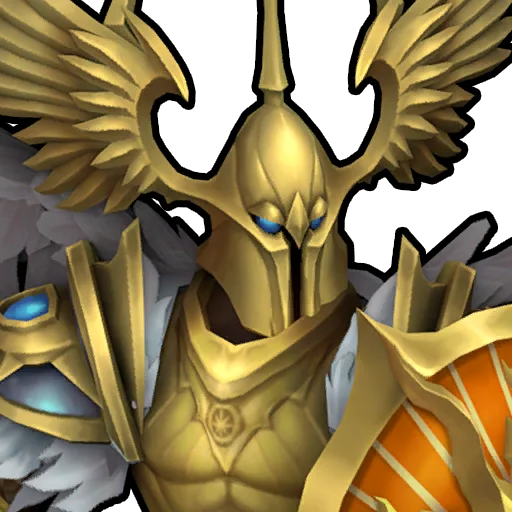
The only tier‑7 shooter in the game: 225 HP, 50–75 damage, flying, Speed 5 now, and Forging Perfection — "whenever a positive effect is applied to a friendly creature, it is also applied to this creature". Every Haste, Blessing and Inner Glow you cast on anyone lands on the Angel too, and Refract and Reflect passes its whole buff set to another stack. The Archangel (4,000 gold + 2 gems) adds Sharpshooter, Duelist and Devouring Chalice, which steals the positive effects off every enemy in a 1‑hex radius. The Apotheosis has 300 HP, Speed 10, Purity Aura ("this creature and adjacent friendly creatures are immune to all negative effects") and Unbending Pride, a barrier against the next instance of damage. Against Dungeon's debuffs and Necropolis curses, Apotheosis; against a buffing Temple or Grove, Archangel.
Heroes worth drafting
Temple's might class is the Knight (starting Attack 2, Defense 3) and its magic class the Cleric (Spell Power 2, Knowledge 3). Every Knight and Cleric starts with Righteousness; the second starting skill and the specialisation are what you draft for. All 18 are on the faction page with full starting armies; these are the ones that come up in ranked.



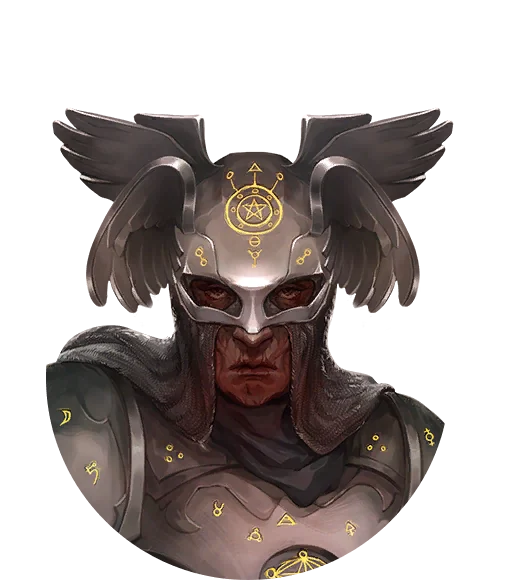

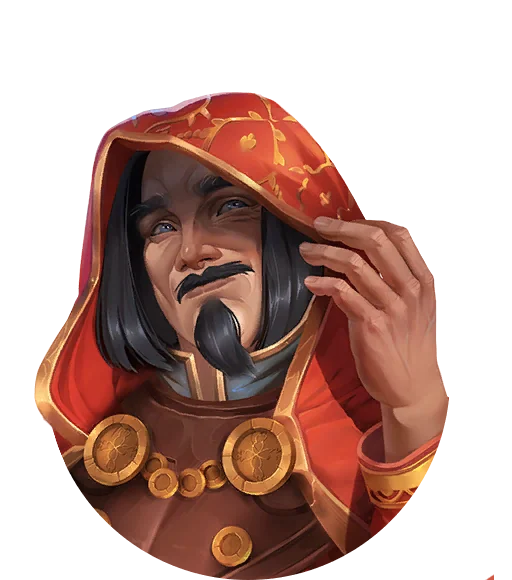






Rousing Presence: "Friendly creatures have +1 Morale. They also have a higher chance of triggering the positive Morale effect: +2% chance per Morale point", growing every six levels. With Cavalry's Inspiring, the Noble Cavalry's new Heroic Presence and the Heroes of Tales and Encouragement laws this is the morale build, and extra turns on Marksmen are extra shots.

Jaeger: Crossbowman growth +1 in your cities; under her, Crossbowmen gain 1 Speed, 1 Initiative and 20% HP, plus 1 Attack and Defense every five levels (every three before 0.82.06), and enemy Crossbowmen lose the same. She starts with three stacks of 8–11 Crossbowmen and nothing else — the fastest Temple clearing start in the game, if you keep them alive.

True Lord: "Friendly creatures gain 10% of his Attack and Defense (as Attack and Defense), plus another 5% for every 6 hero level(s)." A stat hero who gets better the longer the game runs — a Classic pick for Jebus Cross more than a Single Hero one. His second skill is Battlecraft, which 0.82.06 halved to +10/15/20% when waiting or skipping.


Gem Seeker: +1 Gem per day, another +1 every five levels, and double Gems found on the map. Temple's tier‑6 dwelling costs 10 Gems and the Angel's 10 more; on a map without a Gem mine in your zone he is the difference between Angels in week three and no Angels.


Starts with two stacks of 3–5 Lightweavers beside her Swordsmen, and her Weaving the Light adds Lightweaver growth and stats. The Inner Glow buffs from turn one are the point; a strong Single Hero pick where the army you start with is the army you clear with.

Starts with Masterful Blessing: "this version of the spell makes the target always deal maximum Damage". On a stack of 40 Marksmen that is a bigger upgrade than any law.

The data in this build leaves his specialisation text blank; it is reported to double Law Point generation, and if it does, he is the hero for the long Classic games where the 30- and 50-point laws decide the fight.

Masterful Healing Water, which also "dispels all negative effects from friendly creatures". The anti-Dungeon, anti-Necropolis Cleric — and since 0.82.06 he starts with the new First Aid skill, which revives 20% of a won battle's losses at Basic rank, so his week 1 loses fewer Crossbowmen than anyone's.
Heroes to leave for the AI: the economy and movement specialists (Clarissa, Ister, Leon Sticky‑Fingers) do nothing in the fight that decides a ranked game, and on Single Hero templates there is no second hero to hand their bonus to.
The first week
The Temple town has seven dwellings and the resource that gates it is Gems: Threshold Basilica (Inquisitors) costs 4,000 gold, 10 Ore and 10 Gems, the Radiant Forge (Angels) 15,000 gold, 10 Gems, 5 Crystals and 5 Mercury, and every Angel recruited costs a Gem on top. Look for the Gem mine on day one; if your starting zone has none, plan around the Marketplace or draft Heretic Avis.
A standard week (the Garrison for Swordsmen and the Mews for Crossbowmen are already built). It opens with the upgrade nearly every Temple player makes first:
| Day | Build | Why |
|---|---|---|
| 1 | Mews II (1,500 gold, 5 Wood, 20 Alchemical Dust) | Upgrade the starting Crossbowmen to Marksmen (40 gold each) before the first fight |
| 2 | Griffin Rookery (3,500 gold, 5 Wood, 5 Ore) | Griffins for the week-2 fights |
| 3 | Solar Temple II (2,500 gold, 5 Wood, 5 Ore) | Town hall income and Law Points |
| 4 | Solar Temple III (5,000 gold, 10 Wood, 10 Ore) | The gold that pays for everything below |
| 5 | Sundrop Chapel (3,500 gold, 3 Gems, 3 Crystals, 3 Mercury) | Lightweavers, and Inner Glow for the week-2 fights |
| 6 | Marketplace, or Mage Guild I (2,500 gold, 5 Wood) | Marketplace if Gems are short; the Guild for Haste and Blessing otherwise |
| 7 | Threshold Basilica (4,000 gold, 10 Ore, 10 Gems) | Inquisitors recruit on day 1 of week 2 |


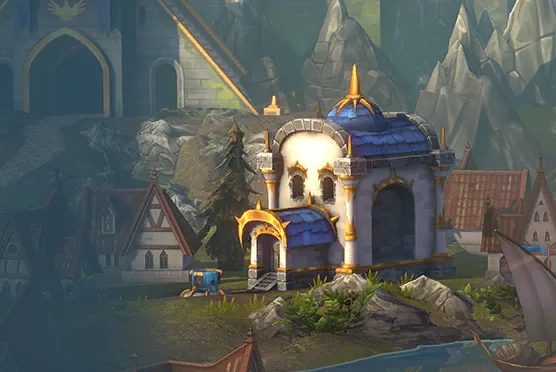
Why the Marksmen come first. The Crossbowmen are the army for the first two weeks, and the Marksman deals full damage at any range: upgrading the stack before the first fight is what lets Temple clear week 1 without losses. Every dwelling upgrade costs Alchemical Dust as well as gold, and the map gives little of it — 8 to 12 a pile, 20 to 40 from an Alchemical Storage once a week — so the upgrades go in this order:
- Crossbowmen to Marksmen (Mews II, 20 Dust), on day 1. If the start leaves you short of 20 Dust, swap days 1 and 2 and upgrade on day 2.
- Swordsmen (Garrison II: 1,000 gold, 5 Ore, 10 Dust), as soon as 10 more Dust turns up: Sun's Aegis to stand in front of the Marksmen, Guard Captains against a melee army.
- Griffins and Lightweavers (30 and 40 Dust), in week 2. The Hippodrome waits until the rest of the army is bought.
On the map: fight what the Marksmen can kill before it reaches them, screen them with the Swordsmen, and send the Griffins at anything that flies. Read Plea for Healing on the first turn of every fight that will come to melee — every stack that is hit afterwards heals once, and the heal revives. The rule for the first two days is to clear neutral stacks only with a clear margin and keep the ranged line alive, because every Marksman you lose on day 2 is one you do not have on day 8. Recruit on day 1 of week 2 in this order: Marksmen and Swordsmen, then Griffins, then Lightweavers; hold gold back for the dwelling you still need rather than for Cavalry.
For templates: on Jebus Cross the creature banks are your army and the town is your gold; on Exodus you have two towns from the start and Town Portal at no cost, so both towns build dwellings and the Griffin Rookery goes up in both. The template guides cover each one.
Laws, in priority order
Temple's law table is on the laws page, with every level's text. Laws unlock in tiers as you accumulate Law Points (0, 5, 15, 30, 50); costs below are Law Seals per level. The 0.82.06 update cut every Elite creature law back to two levels, made the Tax Collectors, Architect's Mastery and Encouragement laws dearer (Resource Riches too, until the 0.82.08 hotfix put it back to 1/2/3 Seals), and removed Execute Excellence — the buff-duration law — from the table altogether; the Hymn of Power Prayer is what does that job now.
From the start (0 points).
 Elite Crossbowmen (3, then 2): "Crossbowman growth in your cities increases by 4. They gain 3 Attack", then 6. The first law of almost every Temple game, and a bigger one than before: +6 Attack in two levels where it used to take three.
 Elite Swordsmen (3/2): +4 growth and +2 then +4 Defense. Second, if you screen with Swordsmen.
 Faith in Magic (2): 250 Astrology Points a day — Clerics who want Second Wind early take it.
 Resource Riches I (1): 2,500 gold, 5 Wood, 5 Ore, once. Take it on day 1 if it buys the Rookery a day sooner.
 Inquisition Crusade (2/2): +20% then +40% damage to summoned enemy creatures. Against Hive larvae and Summon Avatar heroes only.
At 5 points.
 Tax Collectors (3/3): 500 gold a day, then 1,000. Dearer now, but still double the other factions' first two levels, which is why it is the economy law here.
 Elite Griffins (3/2) and
 Elite Lightweavers (3/2, +2 growth and +2 then +4 damage) for the stacks you are actually fielding. The Griffin law was rewritten: the patch notes give +3 then +6 Attack and Defense, and the data behind it is an Attack bonus, though the in-game text still reads "They gain 3 HP".
 Mining: Gems (2/2) if the map gave you no mine;
 Heroes of Tales (3, +1 Morale) for the Aeos build;
 Swift Reflexes (6, +1 Initiative to every friendly creature) when the Seals are spare.
At 15 points.
 Architect's Mastery (3, up from 2): "You can construct +1 building(s) daily." The most impactful economy law in the game; on a two-town template nothing else comes close.
 Sun's Grace (3): Daylight spells +1 level, for Clerics.
 Training: Range Combat (4/4): +5% then +10% Ranged damage dealt and taken less.
 Elite Cavalry (3/2, now +3 then +6 Attack and Defense and +1 Speed instead of Defense penetration) only if you bought Cavalry.
 Coinage Reform (4/2/2): +10%, +15%, +20% gold from every source — a third level this patch, and worth it once Solar Temple III is up.
At 30 and 50 points.
 Encouragement (3/3) raises the chance of Morale triggering by 1% then 2% per Morale point — the capstone of the morale build.
 Vengeful Strike (3/3) makes counterattacks deal +50% then +100%, which with Guardian Griffins is a lot.
 Elite Inquisitors (3/2) now gives +15 then +30 HP and +1 Speed, instead of ignoring the attacker's Attack.
- At 50,
 Elite Angels (3/2) was rewritten — Angels "ignore 10% of the target's Defense when attack and 10% of the enemy's Attack when struck", then 20%, rather than inheriting the hero's stats;
 Hero's Blessing (4/2/2) gives friendly creatures 10%, 15% then 20% of the hero's Spell Power and Knowledge as Attack and Defense, the Cleric's law; and
 Power of Faith (3) lets every Temple hero "learn any spells of any tier" — Temple's own Mage Guild stops at level IV, so this is how a Cleric reaches the tier‑5 spells.
Skills and spells
Knights:  Leadership (+1 Morale, and the morale perks),
 Offense (Battle Frenzy is +1 Attack per point of Morale since 0.82.06, down from +2),
 Defense,
 Tactics (place the Swordsmen in front of the shooters before the first move),
 Luck. The new
 First Aid — "after winning a battle, surviving friendly stacks revive 20% of the units lost during that battle", 30% and 40% at the higher ranks — is worth a slot for any Temple hero clearing week 1 on Marksmen, because a Marksman revived is a Marksman you do not buy.
Clerics:  Daylight Magic first — Haste (+2 Speed), Blessing (+15% basic-attack damage) and Early Start (+3 Initiative, from the Arcane school) are the three spells Temple casts every fight, and a Cleric at Expert Daylight with Hymn of Power up keeps them running for most of the battle.
 Battle Magic was reworked into a trade: friendly creatures gain 20/30/40% of the hero's Spell Power and Knowledge as Attack and Defense, "but decrease by 20% of the hero's Attack and Defense" (30% and 40% at the higher ranks). For a Cleric whose stats are Spell Power and Knowledge that is pure gain; for a Knight it is a loss, so it is no longer the skill every Temple hero takes.
 Thaumaturgy lets the Cleric cast twice a round, from two schools.
What to buy in the Mage Guild: Haste and Blessing at level I; Early Start (Arcane) if it rolls; Healing Water for the Hierophant-less weeks. The spell browser has every level's numbers.




Fighting with Temple
Against neutrals. Shooters kill, Swordsmen absorb, Griffins counter. Plea for Healing on turn one; Fine Bolts on the Marksmen before the stack with the most HP reaches them; Shields Up on the Swordsmen when the neutrals shoot; Valiant Cry on the Griffin the round before it takes a charge. Let the enemy come: every stack that is hit with a Grace of Healing on it heals, and a Griffin that counterattacks twice a round is the cheapest damage you have.
Against players. Temple wins the fights that go past round four. The sequence most Temple players run on turn one is Haste on the Marksmen, Blessing on whichever stack the enemy must answer, Inner Glow from the Lightweavers on the Griffins, and the Angel inherits all three; then Hymn of Power, so that each buffed stack's next ability stretches the buffs it carries. Save Holy Ablution for the round after the enemy's alpha strike, not before it. Against Hive's hornet rush, Sun's Aegis and Guardian Griffins in front of the shooters and Early Start on the Marksmen; against Schism, Apotheosis's Purity Aura blanks the debuffs; against Dungeon, Julius for the Twilight on your shooters, and the Mother Superior beside them against Nightshade damage.
Matchups. Opinion changes faster than data, so read the data: the Classic faction stats show Temple's record against every faction this season, with the rating bracket switch for the top 10%, and the template breakdown shows where Temple over- and under-performs. If Temple's worst matchup this week is the faction your opponent is drafting, that is the ban.
Common mistakes
- Trading Crossbowmen for tempo in week 1. Every other line can be rebuilt; the shooter count is the clock the whole army runs on.
- Ignoring Gems until the Basilica is due. Find the mine on day 1, or decide on day 1 that Heretic Avis or the Marketplace will supply them.
- Buying Cavalry before Griffins and Lightweavers. Expensive, growth 3, and the buffs they would carry are better carried by cheaper stacks.
- Reading a Prayer and forgetting it. Only one is active, and reading a new one replaces it; a stack holds a grace until it fires, so read the Prayer the round before you need it, not the round after.
- Using Holy Ablution early. It is a full heal and a full dispel; it is worth the most when the enemy has just spent their best round.
- Taking the Archangel by default. Against debuff factions the Apotheosis's immunity aura wins more fights than the Archangel's stolen buffs.
- Forgetting the Angel copies buffs. A single Haste cast on the Griffins is also Haste on the Angel; cast the cheap buffs first.
Where this comes from
Stats, costs, growth, laws and ability text are from the game's own files for build 26428102 (4 November 2026, the 0.82.08 hotfix), as published in the game database; the Temple page and each unit's page carry the same numbers with the build id printed under them. The description of the three Prayers combines the game's ability text with Unfrozen's 0.82.06 patch notes, which name them. The strategy draws on TheGamer's Temple strategy guide (May 2026), KeenGamer's week‑1 build-order and best-heroes guides (May 2026), VGTimes' Temple guide (May 2026), Whisper of the House's guide to what to build first, Hydrotonic's Steam guide to the 0.81 damage changes, and the ranked games this site tracks. Sources disagree on where Temple stands — it has been rated anywhere from S to B tier in the last six months — which is why this guide points at the tier list, computed from ranked games rather than voted.
Related: Which faction should you play? · How the ranked ladder works · Glossary